TL;DR
Apple scab is the most common apple tree disease on Vancouver Island. Remove and compost fallen leaves and fruit immediately, do not leave them on the ground. Prune the canopy so it dries fast after rain. Water at the roots only, never overhead. The main infection window is spring when new leaves and flowers emerge during wet periods. Use only fungicide products labeled specifically for apple scab on apples and follow the label timing and rate exactly. If planting or replacing trees choose scab resistant varieties like Liberty, Enterprise, Freedom, or Prima.
Apple Scab on Vancouver Island: How to Identify, Treat, and Prevent It
If you have an apple tree on Vancouver Island there is a good chance you have dealt with apple scab whether you knew what it was or not. It is the most common apple tree disease in our region and BC’s cool wet springs create almost perfect conditions for it to spread. The good news is it is manageable with the right approach; and largely preventable if you get ahead of it early in the season.
What Is Apple Scab
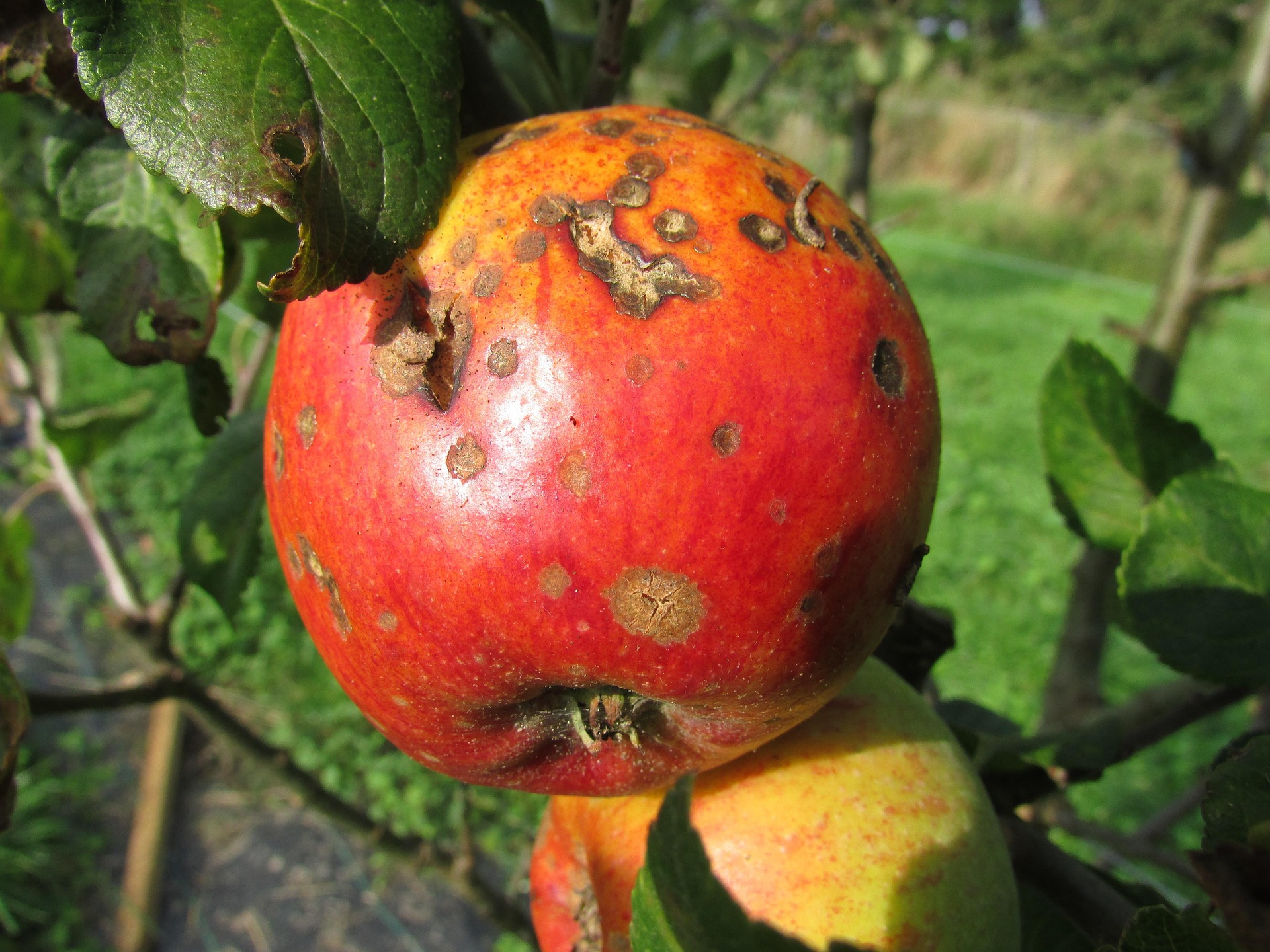
Apple scab is a fungal disease caused by Venturia inaequalis. It shows up as olive green to brown or black spots on leaves and fruit. Infected leaves may curl and drop early. Fruit develops rough corky patches or cracks and becomes unmarketable or inedible in severe cases.
The disease overwinters in fallen leaves and fruit on the ground beneath the tree. In spring the fungus releases spores that infect fresh young tissue during wet periods. Once established on leaves and fruit it spreads rapidly through rain splash and wind throughout the growing season.
The Main Infection Window
This is the most important thing to understand about apple scab. The primary infection window is spring, from when new leaves and flower buds first emerge through petal fall. This is when the tree’s fresh young tissue is most vulnerable and when the fungus is most active.
Apple scab attacks during wet periods in this window. On Vancouver Island that means almost every spring. Prevention before symptoms appear matters far more than treatment after the fact. By the time you see visible spots on the leaves infection has already occurred and spread.
Step 1: Remove Fallen Leaves and Fruit
The single most impactful thing you can do for apple scab is clean up under the tree. Fallen leaves and fruit are where the fungus overwinters and where next year’s spore load comes from. Remove and compost them promptly; do not leave them sitting on the ground through winter.
Do this in autumn after leaf fall and again in early spring before the season starts. Reducing the spore load in the soil beneath the tree directly reduces infection pressure on new growth above.
Step 2: Prune for an Open Canopy
A dense crowded canopy stays wet longer after rain. On Vancouver Island where wet springs are the norm a canopy that dries slowly after rainfall is a canopy that gets scab. Pruning to open up airflow and light penetration helps the tree dry faster and reduces the humid conditions the fungus thrives in.
If you have not already read our apple tree pruning guide it covers this in detail. The principle is the same; thinning cuts, remove crossing and inward branches, open the centre of the tree to light and air.
Step 3: Water at the Roots Only
Avoid overhead watering entirely. Sprinklers and overhead irrigation wet the foliage which extends the period of leaf wetness and creates ideal conditions for spore germination and infection.
Water at the base of the tree at root level. Drip irrigation or a soaker hose delivers water where the tree needs it without wetting the canopy. On Vancouver Island the rain does plenty of that already; do not add to it with how you water.
Step 4: Apply Fungicide at the Right Time
Fungicide is most effective as a preventative measure applied before and during the primary infection window, not after symptoms appear. Timing matters more than the product itself.
Use only fungicide products labeled specifically for apple scab on apples. Read the label carefully and follow the timing and application rate exactly as written. Do not freestyle the application schedule or rate; apple fungicides have specific timing windows tied to growth stages and weather conditions and applying at the wrong time or rate reduces effectiveness significantly.
Do not use a product not labeled for apple scab on apples. The label is the law and using the wrong product can damage the tree or leave chemical residue on fruit.
Choosing Scab Resistant Varieties
If you are planting a new apple tree or replacing an existing one this is the easiest long term solution to apple scab. Several apple varieties have been bred specifically for scab resistance and perform significantly better in wet climates like Vancouver Island.
Good scab resistant varieties to look for include Liberty, Enterprise, Freedom, and Prima. These varieties still require basic care but they will not need the same level of fungicide management as susceptible varieties and they are far better suited to BC’s wet springs.
The Bottom Line
Apple scab is common on Vancouver Island but it is manageable. Clean up fallen leaves and fruit in autumn, prune for an open drying canopy, water at the roots only, and apply a labeled apple fungicide before and during the spring infection window. If you are starting fresh choose a scab resistant variety and save yourself the ongoing battle. Prevention and timing are everything with this disease; get ahead of it in spring and your tree will thank you all season.
Leave a Reply